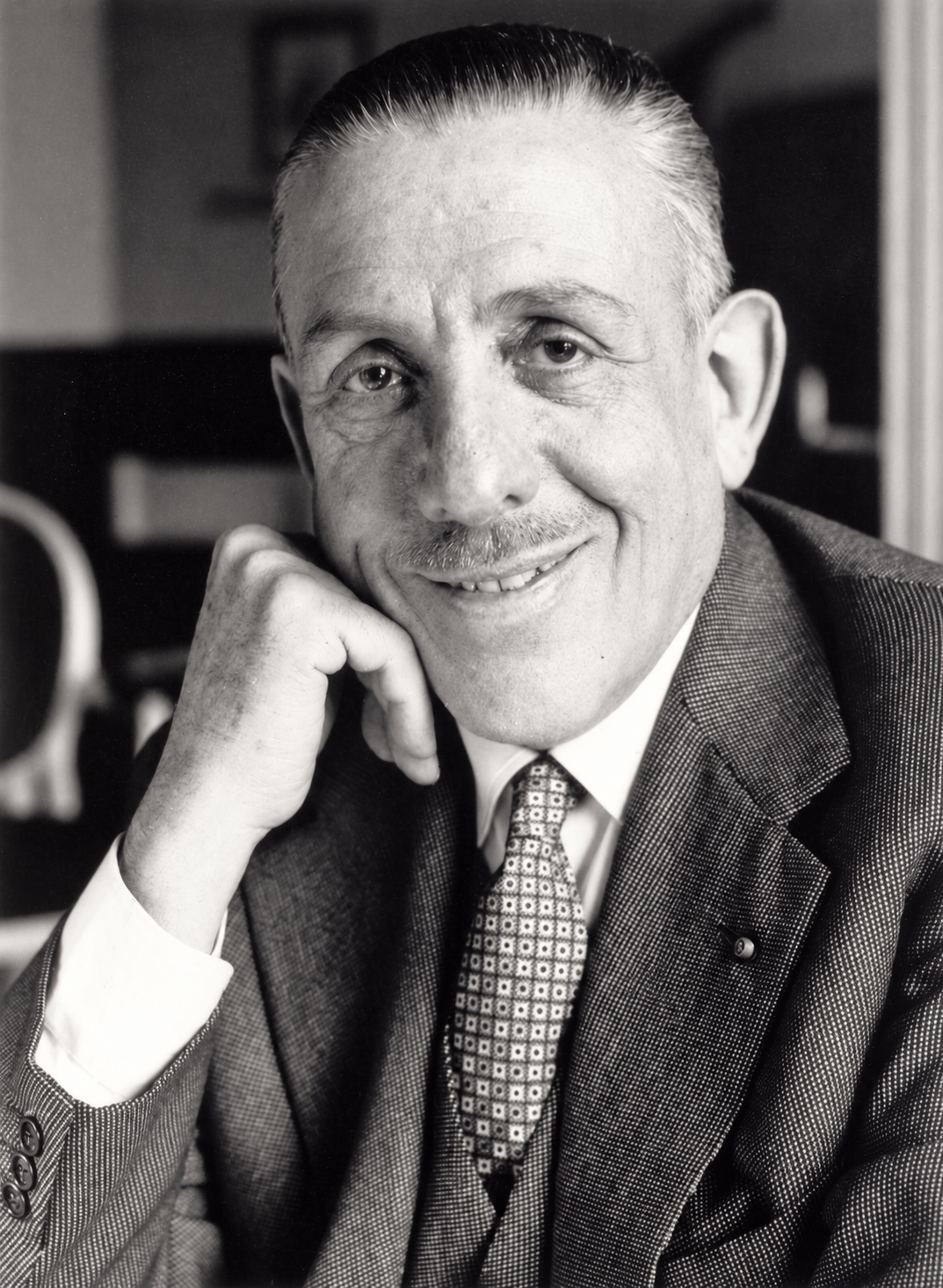
Francis Poulenc (1899–1963)
Le Voyageur sans Bagage official film poster
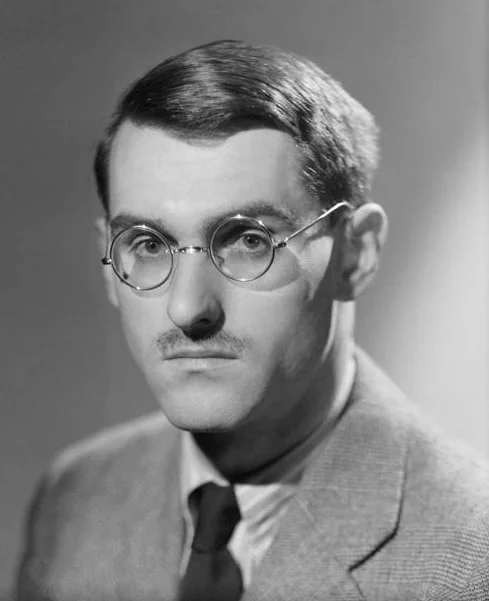
Screenwriter Jean Anouilh (1910–1987)
Bringing Le Voyageur sans Bagage Back to Life
A rare orchestral score by Francis Poulenc and an unexpected musical partnership
Earlier this year, in my Classical Explorations series, I wrote about a remarkable album of music for two pianos by Francis Poulenc, performed by the pianists Antony Gray and Rob Hao. Poulenc is one of my musical heroes, and their playing immediately caught my ear: razor-sharp staccato set against beautifully singing legato; breathtaking voicing, colour and balance; and an extraordinary ability to create the illusion of a much larger ensemble. Every line, harmony and rhythmic idea seemed illuminated, without ever sacrificing Poulenc’s wit, elegance or irrepressible vitality.
David Weuste at Divine Art passed the article on to Antony. He wrote to thank me for what he described as a kind and perceptive review, but our exchange quickly developed into something much more interesting. Antony told me about a project on which he had been working for several years: a reconstruction of Francis Poulenc’s orchestral score for Jean Anouilh’s 1944 film Le Voyageur sans Bagage. He shared the score with me, and from its first pages I could hear the Poulenc I love – the cheeky wit and charm of Les Biches, the sudden shadows beneath the elegance, and orchestral colours that seem at once effortless and precisely judged.
The more Antony and I have spoken, the clearer it has become that there is real fire in this collaboration. He brings an extraordinary knowledge of Poulenc and years of painstaking work on the surviving material; I bring nearly two decades of recording experience and a practical route towards assembling the musicians, studio and production team needed to give the score new life. Crucially, permission for the project has now been secured from Francis Poulenc’s estate – an exceptional endorsement that lends this revival particular significance. The studio and orchestra are confirmed for a recording at Studio Martínek in Prague on 9 October 2026. It is an ambitious undertaking, but an artistically compelling one.
A play about identity and the burden of the past
Le Voyageur sans Bagage began as a stage play by Jean Anouilh. Written in 1936, it was first performed at the Théâtre des Mathurins in Paris on 16 February 1937. It became Anouilh’s first major public and critical success, running for approximately 190 performances. Georges Pitoëff directed the production and played the central character, Gaston, while Darius Milhaud composed the incidental music.
Gaston is a French soldier who lost his memory during the First World War. Several families believe that he may be their missing relative. When he is introduced to the wealthy Renaud family, he discovers that he may once have been Jacques Renaud – a cruel, selfish and violent young man.
Those around Gaston insist that he must accept this former identity. He therefore faces an extraordinary choice: if our memories make us who we are, can someone without memories reject the life that others have chosen for him?
Anouilh based the story on the real case of Anthelme Mangin, remembered as the “living unknown soldier”, a veteran who suffered amnesia following the war. The play transforms this historical mystery into a darker moral question. Gaston is not simply being asked to recover his name; he is being asked to inherit another man’s guilt. Its exploration of trauma, family mythology, free will and the construction of identity still feels remarkably modern.
Anouilh takes his play to the cinema
During the German occupation of France, Anouilh adapted his play for the screen with the writer Jean Aurenche. Filming began in October 1943, and Le Voyageur sans Bagage was released in France on 23 February 1944. It was Anouilh’s first film as a director.
Produced by Léon Carré for Éclair-Journal, the film is a 99-minute black-and-white drama. Its cinematographer was Christian Matras, who would later work on major French films by directors including Max Ophüls and Jean Cocteau.
Pierre Fresnay plays Gaston. British audiences may know him as Captain de Boeldieu in Jean Renoir’s La Grande Illusion, while in France he was one of the leading stage and screen actors of his generation. Blanchette Brunoy plays Valentine, the woman who holds intimate proof of Gaston’s former identity.
Pierre Renoir appears as Georges Renaud. He was the son of the Impressionist painter Pierre-Auguste Renoir and the elder brother of the director Jean Renoir – a fascinating connection to French artistic and cinematic history. The cast also includes Marguerite Deval as the Duchess, alongside Louis Salou, Jean Brochard and Jenny Burnay.
The film opened during the final, violent months of the occupation. Complete records of its original run have not survived, but it appears to have been successful. Its sharp portrayal of family life also attracted criticism from some Catholic commentators, who accused it of systematically mocking the family.
That reaction reveals something of the work’s enduring power. Beneath its polished dialogue and social comedy lies a provocative idea: that family and inherited identity are not necessarily forces for good.
Suggested image: an official Gaumont production still showing Pierre Fresnay as Gaston. Gaumont lists four stills in its online film gallery and identifies them as copyright 1944 Gaumont, Collection Musee Gaumont. Seek written permission for editorial use.
Poulenc and the cinema
Poulenc's score is catalogued as FP 123. It belongs to a relatively little-known part of his output: music for film and theatre. Poulenc was a natural dramatist. Even outside the opera house, his music changes emotional direction with cinematic speed. A brittle joke can be followed by sudden tenderness; a bright popular tune may cast an unexpectedly melancholy shadow. He understood how a few bars could establish a room, a character or a memory without labouring the point.
The date places the score at a particularly charged moment in Poulenc's creative life. In the surrounding wartime years he completed the ballet Les Animaux Modèles, the Violin Sonata and the clandestine choral masterpiece Figure Humaine, whose final movement sets Paul Éluard's poem Liberté. The contrast is striking but characteristically Poulenc: public entertainment, private anxiety, resistance, faith and Parisian brilliance could all occupy the same musical imagination. Le Voyageur sans Bagage may be lighter on its surface than Figure Humaine, yet its story of a man attempting to escape an imposed identity belongs unmistakably to a period in which questions of freedom, responsibility and selfhood carried exceptional force.
That economy is central to Le Voyageur sans Bagage. The surviving soundtrack reveals orchestral music of colour and flexibility rather than sheer weight. Woodwind lines carry personality, the strings can shift from elegance to unease, and gestures that initially seem light acquire a darker meaning in the context of Gaston's story. This is recognisably the Poulenc of Les Biches, the concertos and the theatre works, yet directed towards the precise demands of the screen.
The original mono soundtrack also changes the nature of listening. Dialogue, effects and music occupy the same narrow historical recording, so orchestral details cannot always be isolated cleanly. A phrase that sounds obvious to the casual listener may conceal questions of doubling, register, articulation or instrumental colour. The reconstruction is therefore an act of musical restoration as much as transcription: it asks what Poulenc wrote, but also how his gestures would have sounded before the limitations of 1940s film audio compressed them.
There is an important historical complication. Poulenc's music for the film is often confused with music he supplied almost immediately afterwards for a stage revival of the same play. The film was released on 23 February 1944. Poulenc then completed a separate set of nine theatrical numbers between 19 and 21 March for a production opening at the Théâtre de la Michodière on 1 April, again starring Fresnay. That stage manuscript uses a small instrumental group including oboe, clarinet, cello and piano. The orchestral film score and the later stage music belong to the same dramatic world, but they should not simply be treated as a single work.
A manuscript rediscovered and an orchestra reconstructed
The stage music had its own extraordinary afterlife. Its complete manuscript remained unnoticed in the Association de la Regie Theatrale collection at the Bibliothèque Historique de la Ville de Paris until librarian Bérengère de l’Épine drew attention to it. At the end of that manuscript Poulenc made a separate cello-and-piano version of the second number, Lent. This short, haunting piece is now published by Éditions Salabert as Souvenirs, edited by the Poulenc scholar Hervé Lacombe. It was given a modern premiere by cellist Marc Coppey and pianist Jean-François Heisser in Paris in January 2013.
The orchestral film music presents a different challenge. No orchestral score has survived and the music has remained bound to the film and its soundtrack. Using that surviving soundtrack as his primary source, Antony has painstakingly reconstructed the music through years of close listening, comparison and musical judgement: identifying lines heard beneath dialogue and effects, deciding how they are distributed among instruments and translating historical mono audio into notation from which a modern orchestra can work.
The score is also more substantial than the phrase 'film music' might suggest. My own detailed examination has revealed richly divided string writing, distinctive wind colours, brass, timpani and harp. At times the string parts divide into several independent lines, and elsewhere Poulenc draws individual players out of the ensemble as soloists. Those details matter. The aim is not merely to reproduce the notes, but to restore the depth, balance, transparency and sheen of Poulenc's orchestration with forces properly matched to the music.
Why record it now
Rediscovery is not complete when a score is placed on a shelf. Music returns to life only when performers breathe, phrase, balance and argue with it. The original performance survives within the 1944 film, but no independent recording of the orchestral score is known. This project therefore aims to create what we believe will be its first standalone modern orchestral recording: a serious reference for Poulenc admirers, scholars, performers and anyone interested in French cinema under the occupation.
What excites me most, however, is not rarity for its own sake. The music is wonderful. It has Poulenc's unmistakable fingerprints: elegance without emotional evasiveness, humour that never becomes empty cleverness, and moments of lyricism that seem to arrive from nowhere and leave the air changed. Antony's relationship with this score is profound, while my instinct is to turn that scholarship into the most convincing performance and recording we can make. Between us there is both detailed thought and creative momentum.
The timetable is exceptionally concentrated, and the performing materials must now be refined with great care before the remaining production arrangements are completed. But with the recording confirmed, and the permission of the Poulenc estate secured, the central artistic case is already clear. More than eighty years after Poulenc wrote this music for Anouilh's unsettling story of memory and identity, Le Voyageur sans Bagage deserves to travel again – this time not without its luggage, but carrying its extraordinary history into a new recording.